


Voudia Beach: Where the Earth’s Palette Meets Milos’ Mining Soul
While most travelers flock to the white "moonscape" of Sarakiniko, those seeking a deeper connection to the geological soul of Milos head to Voudia Beach. Located on the northeastern edge of the island, just past the charming village of Pollonia, Voudia is where the island’s vibrant volcanic past meets its industrious present.
In this guide, we’ll explore why Voudia is a photographer’s dream, the science behind its colorful stones, and how the island's 10,000-year mining history is still alive on these shores.
The Geology of Voudia: Why are the Rocks so Colorful?
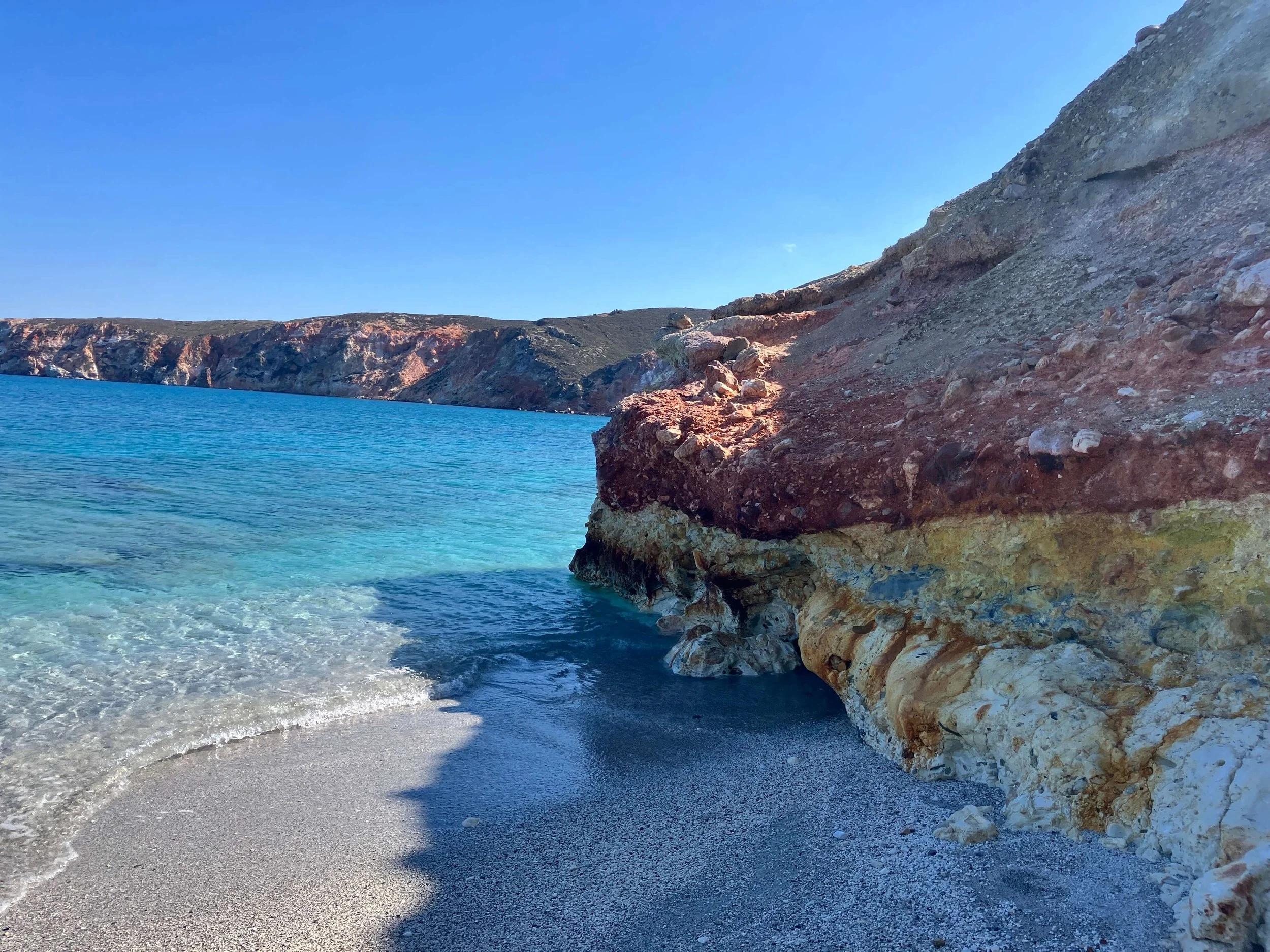
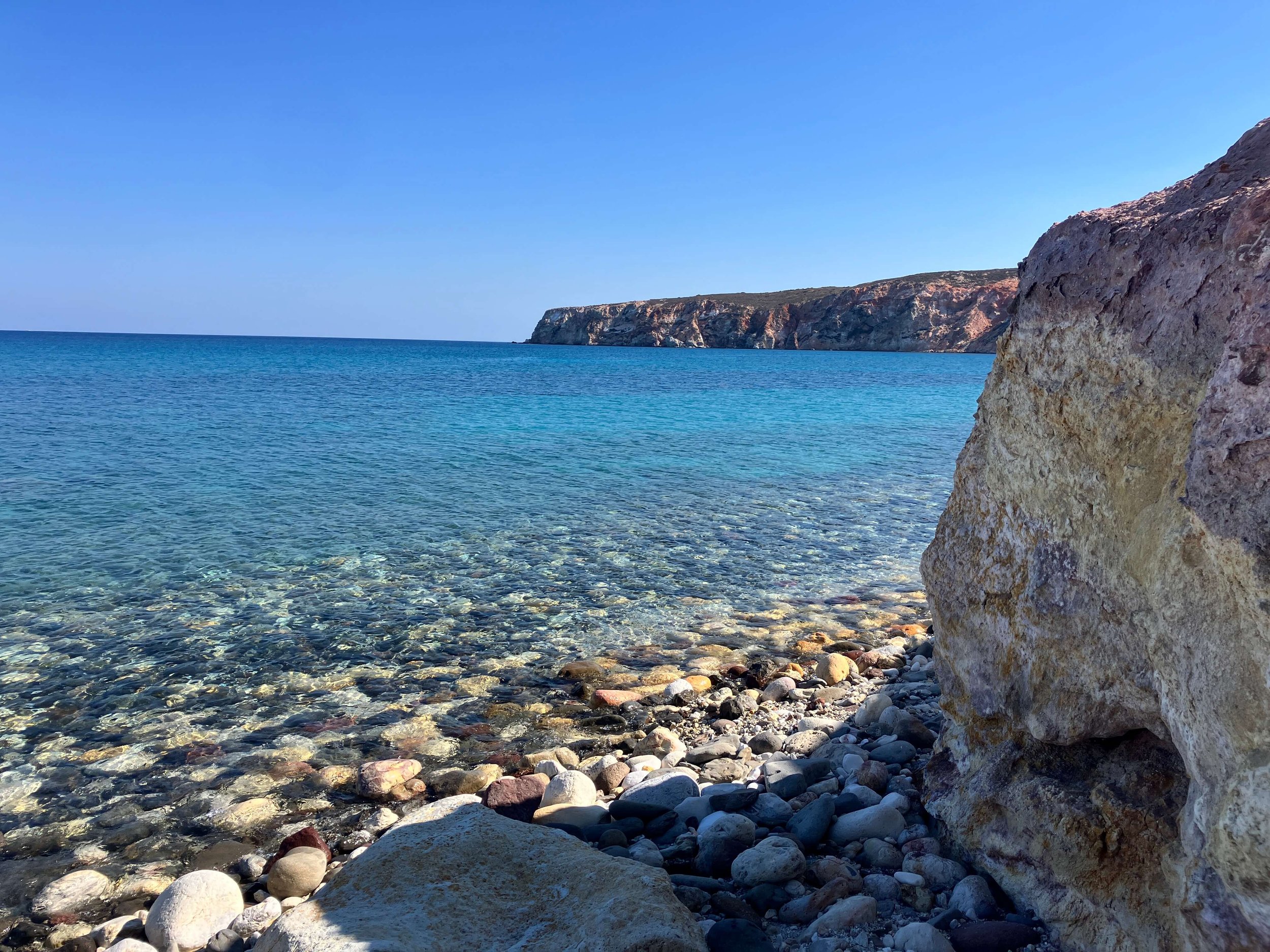
Milos is often called a "Geological Museum," and Voudia is its most vivid exhibit. Unlike the stark white of the north coast, the palette here is a chaotic mix of pinks, oranges, and greens.
The Role of Volcanic Activity
The colors you see in your photos are the result of hydrothermal alteration. Millions of years ago, hot gases and mineral-rich fluids rose through the volcanic rock, chemically changing its composition.
Iron Oxides: The deep reds and burnt oranges in the cliffs are caused by iron rusting within the stone.
Manganese & Sulfur: Streaks of black and yellow reveal the presence of minerals that have been the backbone of the island's economy for centuries.
Bentonite and Perlite: The "Soft" Gems of Milos
If you find smooth, pale green or creamy white stones that feel almost like soap, you’ve found Bentonite. Milos is one of the world's largest producers of this volcanic clay. You may also spot Perlite, a grey, glass-like rock. These aren't just "pretty stones"; they are industrial treasures used globally in everything from construction to wine filtration.
Mining History: From Obsidian to the Modern Age
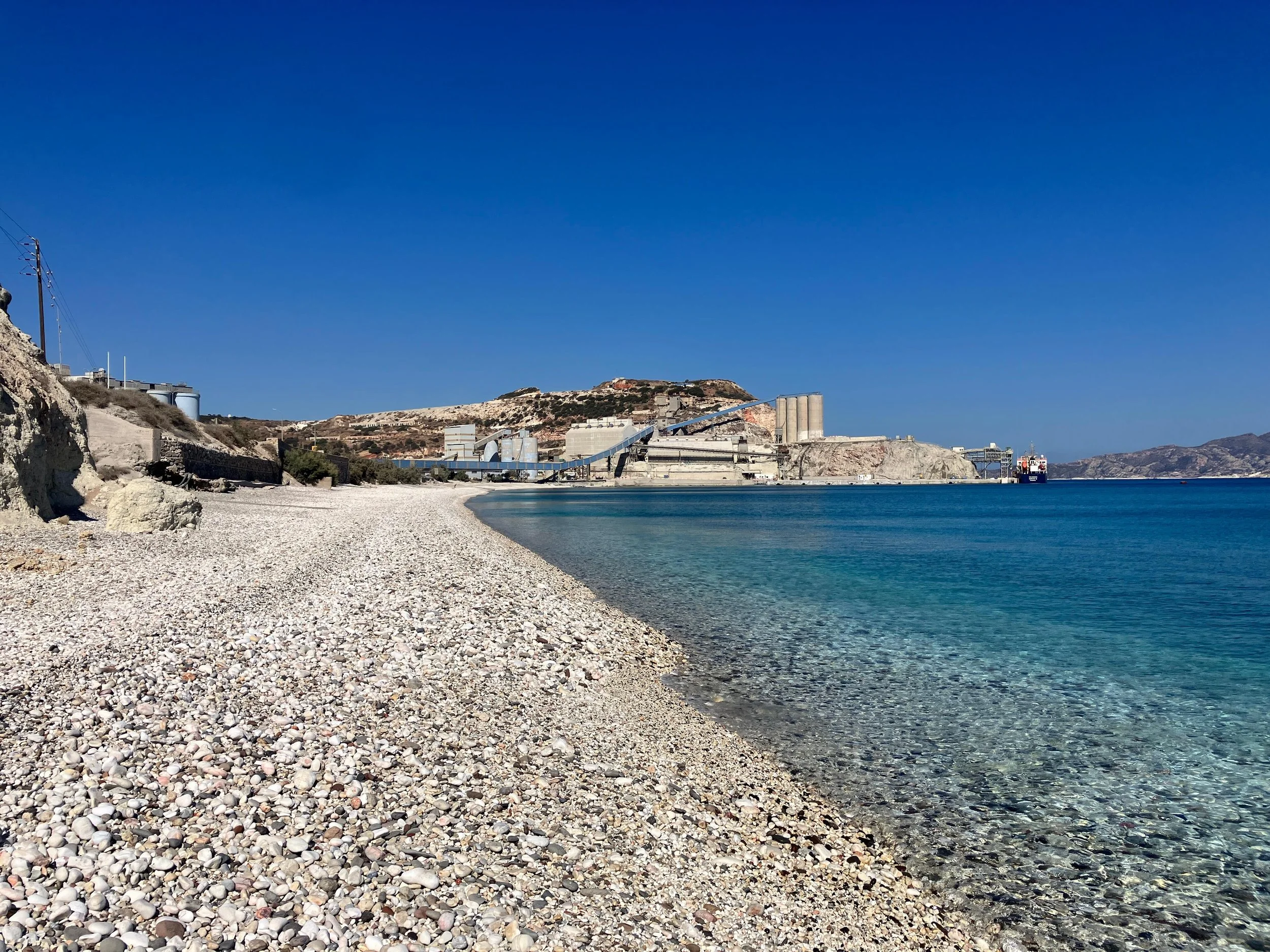
To understand Voudia, you must understand its industrial heartbeat. The beach is dominated by the massive Imerys processing plant, creating a surreal contrast between high-tech machinery and pristine nature.
The 1934 Turning Point: The Birth of Modern Voudia
While mining on Milos dates back to the Neolithic age (with the trade of razor-sharp Obsidian), modern industrialization at Voudia took off in 1934 with the extraction of Baryte.
This is a great specific detail to lean into. The year 1934 is pivotal because it marks the birth of the company Silver & Baryte Ores Mining Co. (now part of the global giant Imerys), which literally built the infrastructure you see at Voudia today.
The name itself is a clue to the island’s hidden treasures :
The "Silver" Hope: In the early days, there was a great deal of excitement about extracting silver from the baryte deposits in the nearby Pilonisi area. While the baryte did contain silver, it eventually proved too difficult and costly to separate on a massive scale. The "Silver" remained in the company name, but the real wealth shifted to the minerals under your feet at the beach.
Baryte – The Middle East Connection: In the mid-20th century, the baryte mined and processed at Voudia was exported heavily to the Middle East. Why? Because baryte is incredibly heavy and was essential for oil drilling to prevent "blowouts."
From Baryte to a Global Mineral Hub
As you look at the massive loading docks in your photos, you’re looking at a site that evolved from a small silver-prospecting dream into the world’s most important source of Bentonite and Perlite.
The 1950s Boom: Following WWII, the focus shifted to industrial minerals. Bentonite (mined since 1952) and Perlite (since 1954) became the island’s "white gold."
The Giant Imerys Plant: Today, the facility at Voudia is operated by Imerys, a French multinational. Because of the operations you see at this beach, Milos is currently the largest producer of bentonite and perlite in the European Union.
A 10,000-Year Continuum: It is humbling to realize that the same turquoise bay where you’re taking photos was likely visited by Neolithic traders 10,000 years ago looking for Obsidian (volcanic glass). Voudia is one of the few places on earth where you can stand in a prehistoric "factory" and a modern one at the same time.
Fun Fact for your readers: Locals still sometimes refer to the mining company as "Barytine"—a linguistic leftover from those early 1934 days of baryte mining!
Did You Know? The Perlite processed at Voudia is a unique "glassy" volcanic rock. When heated to 850°C, it expands up to 20 times its original size—just like popcorn! If you see white, lightweight pebbles at Voudia, you might be holding "nature’s popcorn."
A Living Industrial Monument
As you sit on the sand, you'll see massive conveyor belts and loading docks jutting into the sea. This isn't a "ruin" like the Old Sulfur Mines (Paliorema); it is a working port. Huge bulk carriers often anchor in the bay, waiting to transport Melian earth to international markets.
Pro Tip: Look for the abandoned stone buildings nestled against the pink cliffs—these are echoes of the early 20th-century miners who worked these shores long before the modern machinery arrived.
Why Voudia is a Photographer’s Hidden Gem
Industrial Contrast: The rigid, metallic lines of the loading docks against the soft sapphire water create a "Steampunk" aesthetic.
The "Neon" Sea: Because the seabed is composed of pale minerals like kaolin and bentonite, the water at Voudia reflects light differently, resulting in an intense, electric turquoise.
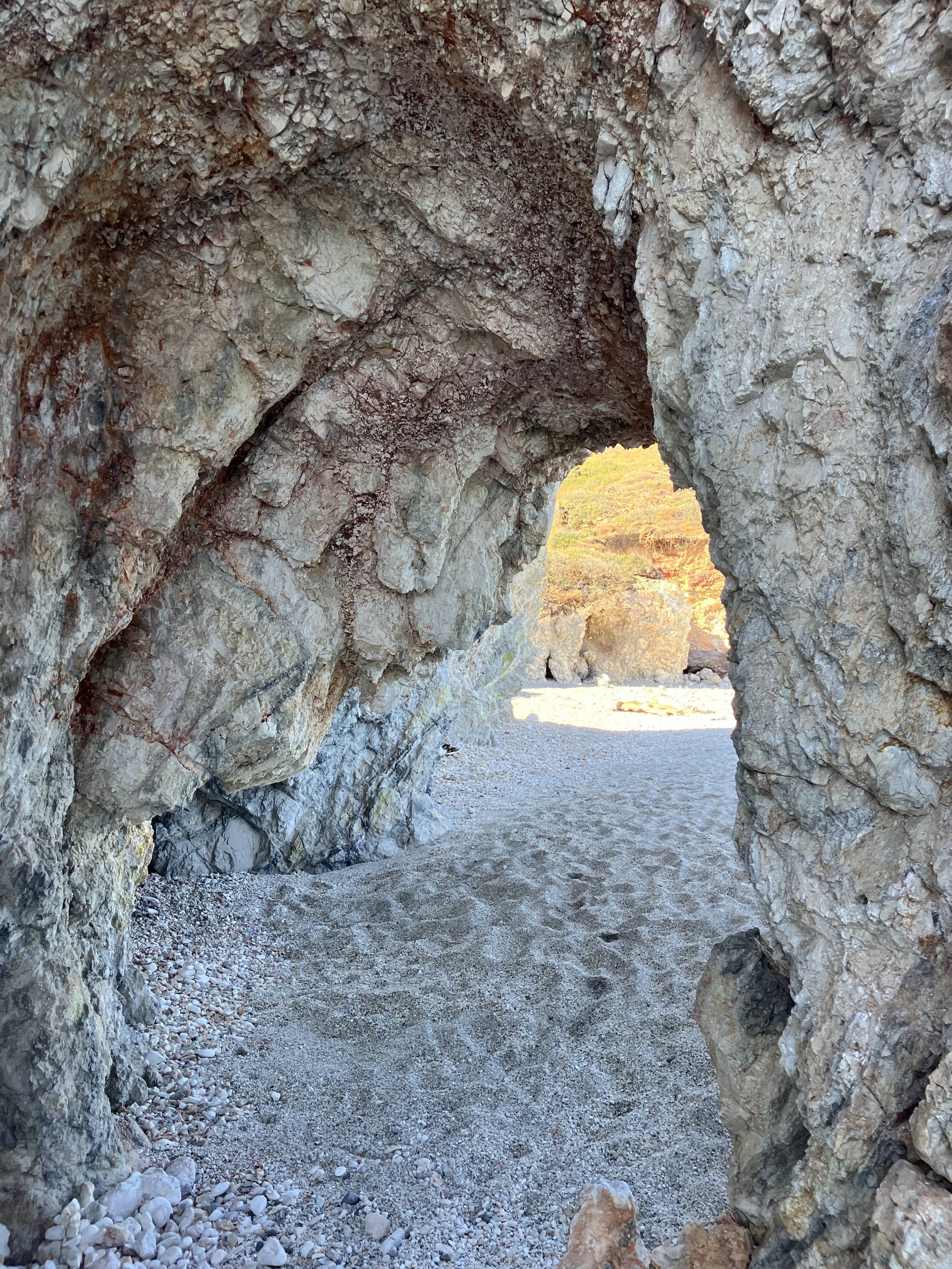
Macro Opportunities: The shoreline is a mosaic. A photo of the different textured rocks (rough volcanic tuff vs. smooth bentonite) is a great way to show "real experience" to your readers.
Travel Tips for Voudia Beach
Getting There: You’ll need a rental car or scooter. Follow the road past Pollonia toward the quarries. The road is a bit rough and there is parking near the beach.
Facilities: There are no sunbeds or bars. This is a wild, industrial beach. Bring plenty of water and snacks from Pollonia.
The Scent of the Earth: Depending on the wind, you might catch a faint scent of sulfur—a reminder that the volcanic fires of Milos are never truly dormant.
Final Thoughts
Voudia Beach isn't for everyone. If you want luxury and umbrellas, head to Firiplaka. But if you want to see the real Milos—the island that was built on the strength of its minerals and the beauty of its volcanic "errors"—Voudia is an essential stop.
